Tuesday, January 15, 2019

"IT'S OK" is not OK

When your dog suddenly panics, freezes, cowers or balks when something happens that he perceives as frightening, what do you do?
If you immediately turn back to him (mistake #1) begin to verbally reassure him that "It's OK' (mistake #2) and bend down to pet and comfort him (mistake #3) then you are MIRRORING him, not leading him.
I see it all the time- very kind, compassionate, loving dog owners do all the EXACT WRONG things when their dog becomes frightened.

Think about this... if the room you are sitting in right now was on fire and you were trapped, would you want a fireman to gently open the door, give you a hug and tell you "It's OK" ?!?!
NO!  You would want him to take charge, have a plan and lead the way OUT!

But if what you do is JOIN the dog in his feelings, you are not helping him overcome them.

By turning back to him, you have left your status of  leadership.  You have gone back into the fire with him.
When you feel bad for the dog, now there are 2 beings that feel bad.
If you bend down and pet him or pick him up and carry him, you are rewarding an undesirable state of mind and taking him out of the situation, rather than teaching him to process through it.

Well crap- that's exactly what you do, isn't it???  That's ok- it just means you are a nice person.  But lets make you into a nice person who is a hero to their dog.

Next time let's have a different game plan.  When your dog panics:

FIRST: look straight ahead at the direction you were intending to travel and KEEP GOING.  (don't go back into the fire)  Be sure you have a non-slip collar like a martingale, on your dog at all times, so that he has no choice but to go with you.  

SECOND: breathe, move forward and cheer- not comfort- "WOOHOO Buddy, here we go!"
This is hard when you have an audience and it appears you are dragging your dog, but ignore those feelings for your dog's sake and for progress' sake.

THIRD: physically lead your dog THROUGH the fear tunnel.  Get all the way out and past what frightened him and then... this is the hard part....
SHUT UP!  Just stand tall and relax and DEMONSTRATE that IT IS OK.  Give your dog process time to realize that HE IS FINE and that he navigated a fearful situation by following a confident leader.  And then you can celebrate with a snuggle!

What happens is that each time your dog moves THROUGH and OUT OF the fear tunnel, (instead of you crawling in it with him) he learns that you are confident in bad situations and all he has to do is go with you!

I personally own a Dutch Shepherd that was handed to me at 8 months of age and told she was stupid and un-trainable- because she was completely shut down.  She wouldn't even open her eyes and bolted at the slightest sound.  It destroyed me to see her like that.  So I put her to work- training in a variety of situations that she perceived as SCARRRRRRRY. 
 I'll never forget the first time I walked her past a fire hydrant and she bolted and spun and nearly dragged me to the ground.  
However, a year later, that same little Dutch girl, was ranked #1 in all of World Cynosport Rally Obedience.  "Stupid and Un-Trainable" became "I trust you and will do whatever you say."


You can do it too.  Train yourself.  Lead your dog.

Tuesday, October 16, 2018

"SLIPPED HIS COLLAR..."

Such sad stories start with the words...  "He just slipped his collar." 


And it's so totally avoidable.
Regular flat collars slip off.  Harnesses slip off.  
Frightened dogs.  Stubborn dogs.  Startled dogs.  
They suddenly back up and pull and they're GONE. 
Just this morning I was on my way with my dogs to search for a tiny dog that had "just slipped his collar."
Before I could arrive on location, I got the news...  "Search called off.  Not a happy ending."

If only everyone knew about- and used Martingale collars- this unhappy ending could so often be avoided.

A Martingale collar fits like a regular flat buckle collar.  You can attach I.D. tags to it.
Unlike Choke Chains, which constrict indefinitely, the Martingale is safe, humane and effective to use in training and every day walks, as it applies pressure, but does not strangle.

But the Martingale's best feature is that, if adjusted properly, it's ESCAPE PROOF.

For big neck dogs, that would normally need their flat collar adjusted snugly to keep it from sliding off, this collar should fit neatly at the top of the neck and allow you to slide 2 fingers underneath.  It only tightens when the dog pulls against leash pressure, or backs up.

There are different versions of the Martingale.  Some have a nylon drawing circle and others have chain.  They both work with the exact same drawing mechanism.  It's just a matter of personal preference which you choose. 
 Some have clasp buckles and some just slide over the head.  
They are relatively inexpensive and usually don't cost any more than a regular flat collar.

If you have a dog with a large head, you should probably choose the one with a clasp buckle so that it can be fitted tightly enough to be effective.  When fitting the collar, the two side rings should BARELY be able to touch with extreme pressure.  Remember, the whole purpose of this collar is to keep it from coming off.  

Even if your dog is a 3rd level obedience champ or walks perfectly on leash, I strongly advise using a Martingale at all times.  You never know what freak accident can happen and you don't want a sad story that starts with the words "he slipped his collar."

I don't make or sell Martingale collars.  I'm just a trainer, a dog lover, who's heart is broken over another unnecessary accident.

Wednesday, December 6, 2017

3 Ingredient K9 Protein Pick Ups

3 Ingredient K9 Protein Pick Ups

Here is a recipe I came up with for an easy protein snack to pack to trials for an energy pick up.  Or just for a healthy treat because your dog is so dang cute...

And, worse case scenario- if there's no concession stand- you can eat them too, if you're desperate!

Heat oven to 350*


4 eggs
3 cups oatmeal
1 cup peanut butter

Mix together and roll into golf ball size


Bake for 15 minutes!


Easy Peasy Enjoy!!!

Friday, February 17, 2017

BOTTLE BABIES

'Tis the season for orphaned animals... 

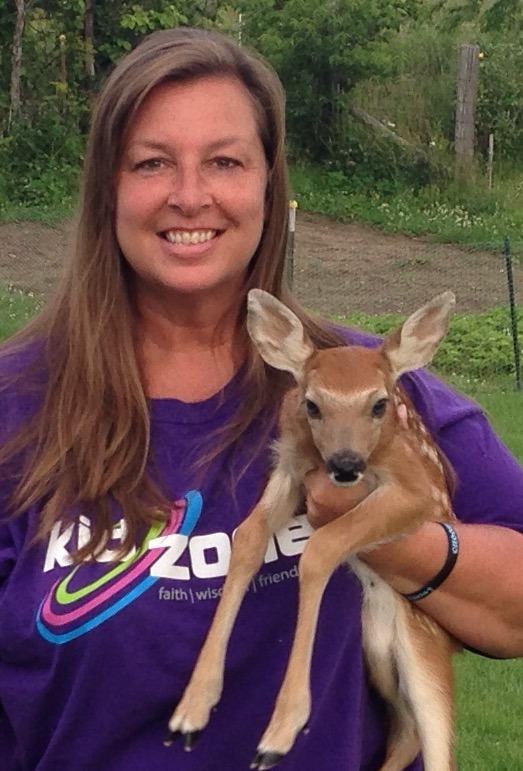
 We have been doing wildlife rehab for years.  I've raised countless deer, squirrels, raccoon, owl, coyote, bunnies and foxes.  Not to mention, I did my fair share of reviving many puppies and kittens as a vet tech over the years.


You may be doing more harm than good if you don't take care of an orphan properly.  Whether it's kittens, raccoons, puppies or bunnies, here are some things you need to know.

1.  Warmth before food.  If you find an orphaned animal fallen from a tree after a storm and it's wet and cold, it's not going to eat.  You need to get its body temperature up FIRST.  Wrapping the orphan in a thin t shirt and holding it next to your body is a great heat source and will be very close to its natural body temp.  
When you go to bed, place the orphan in an open container with a thin layer of bedding it can burrow into (like a small towel) and place ONLY the CORNER of the container on a heating pad set on LOW.  This will allow the orphan to move closer to or further from the heat source.  Heating pads vary in temp and its really easy to kill an orphan by over heating.

2.  Orphans get hypoglycemic quickly and will be too lethargic to eat.  If you force feed them, they will choke and die.  You can easily raise blood sugar levels by dipping a cotton swab in honey and wiping it inside the cheek.  The very vascular membranes of the mouth will quickly absorb the sugar.  Once is enough.  Spiking the blood sugar can be as harmful as low blood sugar.  Once the orphan's blood glucose has risen, it's appetite will usually kick in.


3.  THIS is how baby animals eat- NOT ON THEIR BACKS!  All it takes is one inhaled drop of milk into the lungs for the orphan to get pneumonia and die.  If you'd like to experiment- lay on your back and drink a bottle of Pepsi.
*  Hint: you will choke.


4.  Here is proper hand positioning for bottle feeding.  Place the orphan belly down on your palm..  Put its head between your first and middle fingers.  This will allow you to steady it, but also be able to see if it's drinking.


5.  Stimulation:  mom licks the babies while they are nursing.  It's not just a bath.  The movement of her tongue on their bodies stimulates digestion.  You HAVE TO do the same thing until they can potty on their own.  Use a tissue or soft paint brush to wipe the whole body especially under the tail.  Be gentle.  Be ready for a mess.  But above all, keep the belly DOWN!   
If your orphan does cough, lower it's head below its body and allow those milk bubbles to run out.

If you are taking care of wildlife until you can get it to the proper people, call your veterinarian and ask for milk replacers and feeding schedule that are similar to the same age puppy or kitten.  Most species of animals open their eyes between 10-14 days.  If the orphan you have still has its eyes closed, it is very vulnerable to every problem there is.  Be careful.  Don't be a hero.  Get it to a professional!

Reminder:  wild life are not pets.  It is illegal to keep them.  Contact your local Wild Life Rehab or the DNR! 

Monday, February 13, 2017

and speaking of Valentine's Day - ARE YOU AND YOUR DOG ENGAGED???

Whenever I am working with a dog in our training area and open the door, this is my view...
My dogs line up HOPING and PRAYING that it's their turn next!  

    If you've ever seen me work my dogs or anyone else's, you can testify that I have very high expectations for compliance.  I have a very clear, consistent rule: Compliance will get a reward every time and defiance will get a consequence every time.
So how come they don't hate me???  How come they would do ANYTHING for me?

     The answer is simple- it's ENGAGEMENT!  The first lesson I teach any dog is to engage me- make eye contact- ask me "WHAT???" 
 I'm not into intimidation or threats.  It's just a simple rule:  Good things come from making an effort to understand and communicate with me.

Lesson #1 with an 8 week old puppy begins with engagement.  Sure Pup, you are allowed to wander off and sniff things, but.... LOOK WHAT I HAVE!!!!!  (ball!  treats!  excitement!)
Any time the puppy interacts with me, even if it's a quick drive by, I praise them.  I'm silent when they don't want to be around me.  I won't beg for their attention.  But I will REWARD the heck out of it.

Next step is the Name Game.  It's simple.  Say the dog's name and if he makes any effort to look your way, you reward it.  I toss a treat or ball and go crazy every time the dog responds to his name.  No commands are given.  I don't make him "Come here" for reward.  I don't make him "Sit."  All I ask is to look at me and throw reward at him.  SIMPLE, huh?

Why?  Because communication begins with eye contact!  If we don't look, we don't acknowledge.  We don't respond.  If you have teenagers, you already understand.  
I advance and graduate the game by making finding my eyes more challenging.  Sitting on a five gallon bucket or a swivel chair and turning away from the dog makes it a fun challenge for the dog to come find my eye contact.  
Later, I might add tempting distractions like food or toy on a table and go ballistic when they choose to look to me instead.

This ENGAGEMENT is the basic foundation for every discipline, whether you're training the next world champion dock diver or need the family pupster to stop barking at squirrels.  It all begins with a relationship that is the best thing going.
    I want my dogs to anticipate and hope for a command, because it carries a huge opportunity for reward!
   So, are you and your dog engaged?
 If your answer is "well, yes, if I have a cookie" then that's all you need.  You have a reward system in place, now just be clear and consistent and teach your dog how to earn it.  By ENGAGING!


Friday, February 3, 2017

SERVICE DOG ETIQUETTE


I almost always have a Service Dog at my side- whether it is my own personal dog that helps me with seizures, mobility and balance, or a dog that I am training, and I am always appalled at the reaction of people around me.  So, here are some guidelines to help you understand the role of a Service Dog and how you should respond to one.  


    The super power of the Service Dog is in their ability to recognize when things are "off" with their handler.
They can detect heart rate, blood pressure, breathing rate, mental status, blood sugar, pheromones and many other body functions when they are connected.
    However, many factors can interrupt the dog's ability to recognize and alert to change.  That is why it is so important for anyone in the area to be respectful of a Service Dog team and avoid distracting them at all cost.

    Never- EVER interact with a Service Dog.  
*The first reason being, that you will distract his attention away from his handler and he might miss a life saving signal.  
*The second is that a large part of a Service Dog's training is to only concentrate on his human.  Dogs selected to be Service Dogs have to be naturally friendly, so in many cases, a large part of their training has had to be teaching them to not socialize while on duty  Think of a Greyhound bus driver barreling down the highway at 60mph.  If you were on that bus, would you want the driver looking around and talking to everyone on the bus???  No!  Eyes on the road!
    
    You also need to remember that Service Dogs are still dogs.  They are sensitive to everything around them.  So you need to be careful not to step on, bump or startle them.  Dogs are low to the ground so anything happening above them can be frightening.  Dropping luggage, a purse or a backpack near them might frighten them the same as it would if we had something drop off of a high shelf past our head.  If a Service Dog feels threatened in a space, he might become more concerned with his own safety, rather than that of his handler.
   
A Service Dog team is a relationship that strengthens with time.  You can help that process by being respectful.  While some handlers might appreciate a compliment directed to them, like telling them their dog is pretty, still,  for the most part, people with disabilities just want to navigate through their day like everyone else and not constantly be pointed out or made to feel different.

   Lastly, remember that not all disabilities are visible.  Don't try to examine the handler and figure out what his disability is.  That's none of your business!
If you were picking up a prescription at the drug store and someone came over and tried to read the label to find out what was wrong with you, how would you feel???
   I have actually had clients who were reluctant to take their Service Dogs in public because of the reactions they get from lookey-lou's.  That is so unfortunate and unacceptable!

 Learn to coexist with Service Dog teams by being kind, considerate and respectful.  If your children are curious, it's an awesome opportunity to teach them how Service Dogs help people, but do it privately- don't point and explain loudly- "Look!  A Service Dog!  We can't pet him right now because he is helping his mommy."
...... yeahhhh that happens constantly.  Grrrrrrrrrr

Friday, September 16, 2016

Simon says.... What???

COMMUNICATION made simple!

Remember the game "Simon Says" that we played as kids?

Simon says- close your eyes.
Simon says- open your eyes.
Simon says- raise your right hand.
Put your right hand down.

If you put your right hand down, you lost and were out of the game.  Why?   Because the rules declare that you should only obey commands that begin with "Simon says."
But what if they said "Simon said"?  Or what if they said "Sliming says"
Would you hesitate?  Would you question if you heard right and if you should obey?
Of course!  Because you are a good listener and you want to WIN!  You didn't have to be threatened to obey.  You tried hard to obey because it was a fun game and you really wanted to WIN!
 
The same childhood game can be used as we train our dogs.
I hear dog owners all the time telling their dog "Sit. Sit down.  Come on.  You can do this.  Do you want a treat?  Sit down."
Or even more often I hear "Sit... Sit..... Sit.... Sit..... Sit..... Sit"

So let me ask you a question... what is your command for SIT?  Is it "3 sits" and a "sit down."?  Or is it "do you want a cookie?" or is it "Come on, sit for mommy."?

And what are the rules of the game?  If the dog sits, what happens?  And if he doesn't sit, what happens?
Oh wait- there are rules???  YES!  Absolutely!  And dogs desperately want to know what they are.  And you are confusing the heck out of them because you don't have any rules!

Here is a simple formula to follow for CLEAR, FAIR communication with your dog once he knows what the command means.

1. Say your dog's name to get his attention first and then give the command ONCE in a firm voice.
2.  Look at your dog.  Is he sitting?  Then give him a reward- something he really loves- a treat or toy or lovins.
 If he is not sitting, then give him a consequence.  Depending on your dog's drive, sensitivity and personality, a consequence may be simply turning away or applying leash pressure to direct his body into a sitting position.

It's that simple, People!  The rule is this: Obeying gets rewarded.  Disobeying gets a consequence.
The rule is not that you will repeat, negotiate or change your mind about what you want him to do.

I can't tell you how often I am called to evaluate an "aggressive" dog and when I arrive,  the dog greets me by lunging and barking and growling, and the owner stands there petting the dog and telling him "It's OK."
So you want me to make your dog stop doing something that you are rewarding him for???  Huh???
You can't give a positive response to a negative action.  That is against your own rules!
Whether the command is "Sit" or "Come" or "No bark" the rule needs to be the exact same-
Obey gets a reward.  Disobey gets a consequence.  How confusing is it to a dog who is being scolded for barking, but is being petted all the while he's barking?  That's so confusing to me it makes my head hurt!


I also think that social pressure some times makes us feel guilty and that for the sake of the those watching, we need to have a preschool level conversation with our dogs in our best puppy wuppy shmooshy punkin face voice, otherwise people will think we are being unkind.  You know what is unkind???  INCONSISTENCY!
When we drop our authority and become wishy washy, we lose our dog's trust. When we are too insecure to give a direct command that is easy to understand and follow, we are doing our dogs a HUGE disservice and diminishing their ability and drive to please us and WIN the game!

If you are guilty of negotiating instead of allowing your dog to win the game by obeying, it may take a bit to turn that bus around.  But you can!  Starting today- go get your leash and a hand full of hot dogs and play the obedience game.  Teach your dog the rules clearly so he can WIN!  It's a simple game he will love when YOU learn how to play FAIRLY!

Simon says GO TRAIN YOUR DOG!