Thursday, May 5, 2022

NO HUGGING!

I'm going to keep this short- because I want everyone to read it...

If you ever have the opportunity to watch a very dominant dog meet another dog, you might see a behavior that I call "necking."  The dominant dog will lay his neck over the other dog's shoulders or back and press down.  It is a body language that tests the other dog's temperament and says "I'm the BOSS...  what are you going to do about it?"

If the other dog is submissive, he will simply accept this status and they will get along fine.  But if he does not accept the dominance of the other dog, he will turn and snap and most likely a fight will break out.

When a child leans over a dog to hug it, this behavior can be interpreted as a challenge by the dog.

Your dog may be very tolerant and enjoy this kind of affection from your child.  But your child needs to understand boundaries when interacting with other people's dogs.

And as dog owners, we also need to teach children who interact with our dog, that hugging or laying on or - heaven forbid- sitting on a dog is never ok.  I insist that children sit down and my dog sits so that they can interact safely.  I don't want the child to trip over or step on a tail or fall against my dog.

This may seem like an "eye roller" post to some, but I've seen way to many children injured and good dogs having to be euthanized because a child simply did not understand the message that they were innocently sending a dog.  

HUGGING = NECKING  Maybe the dog will accept it.  Maybe he won't.  Maybe yours will.  Maybe the next one won't.


Monday, May 10, 2021

 MOVEMENT-

if you’ve ever trained with me for more than 5 minutes then you’ve heard me say the phrase that "movement is dominance."
"Dominance" has become an ugly word in today’s society, but it is just another term for taking the lead. Even if there are only 2 living beings in any situation, whoever can move the other is the dominant one. The dominant one takes the lead on which direction is traveled and how they will get there.  Even very kind, easy going people- or dogs- can be dominant by using some form of manipulation to move another.
Dominant does not mean “abusive.”
I once had someone tell me they only use “positive reinforcement” for their dogs because they don’t like to hit them.
What?
So abuse is the opposite of positive???
Um. No.

Yesterday I was watching a pair of geese move their tiny flock of babies across a busy street and parking lot. There were about 8 geese total. Mama Goose was pecking at the bums of the tiny geese, moving them along slowly but at the same time keeping them close together and going all in the same direction.
What she was not doing was standing in front of the babies, facing them, and pleading for them to come with her.
And yet that is what I constantly see humans doing to try to convince their dog to follow them. A good leader does not beg and plead and barter. A good leader moves in the right direction, facing forward demonstrating confidence in the movement.
I'm sure some of our “positive only” training counterparts would consider her pecking at the tiny yellow fluff butts to be abusive. I mean, she looked pretty aggressive, with her neck coiled like a cobra squawking and carrying on.  Why didn’t she just kindly and patiently offer them a treat if they all stayed together and went across the parking lot?


Because the seriousness and dominance she demonstrated let her babies know that it was critical for them to follow her. She kept them safe. She delivered them to the other side despite the closeness of big scary rolling tires and roaring engines.
 The uncertain goslings trusted her completely and she delivered them safely to the other side. None of the baby geese were traumatized by her authority. Instead they reached the pond on the other side and nestled down peacefully into the long grass.

We, as dog handler’s, need to learn to move our dogs just as Mother Goose did.
For the safety and well-being of your dog, learn to be the leader and don’t be afraid to use humane correction to keep your dog's world big and safe and fun.  Whether you're walking into the vet or trying to get them into the car, be a good leader, not a sappy nagger and don't worry about what other people think.  Find the right collar, leash and equipment to help you be a successful leader and don't join in your dog's drama and anxiety by feeling bad.
Look forward at where you are going.  Move assertively.
Lead,  Feel good about it.  Repeat.

Friday, August 7, 2020

EUTHANASIA; when your heart flips wrong side out


EUTHANASIA: when your heart flips wrong side out...

It is THE WORST day of your life with your dog.  It is a day you may have been anticipating for weeks or months- when you know you are near the end, taking the last walk, eating the last ice cream cone or hamburger, or for my dear sweet Mooi- plate of spaghetti.  Whether it be due to old age (hopefully) or a diagnosis with a sad prognosis, the time to euthanise is self inflicted, unmitigated torture.

You play it over and over and over in your mind... asking all the questions- 

"Am I making the right decision?"  "Will my dog understand?"  "Am I being selfish?"  "Should I wait?"  "What if he might get better?"  

When I was little, we lived on a farm at the end of a half mile gravel lane.  My mother would wait for me to get off the bus at the road.  I would climb down with an armload of books and lunchbox and papers and sweaters and whatever else I brought home each day.

She would empty my arms and carry them for me- setting me free to run and dance and skip and pick flowers and climb trees and catch caterpillars and do cartwheels and play all the way home.  

When you sacrifice your own emotions, to let your dog go, all that pain, all that grief, all the breath that leaks out of your lungs... you are taking all that on, to let him go free.  What you are carrying, releases him from his suffering.  You take it all on, as you have his whole life, to give him the best you have to offer.

When we set our beloved dog free, it feels like someone is pulling a loose string from our heart, unraveling a lifetime of memories and daily routines and relationships.  There is no official definer of when the time is right.  There is NO easy way to get through it.  It.  Is. Horrible.

But it is what we sign up for and it is a darn good trade off for the the lifetime of loyalty and love and fun and laughs and best friendship that we cherish every day they are with us.

When the time comes, grieve with all your might.  Don't hold back.  Those who know, understand.  Go through old pictures.  Hug his favorite toy. Put his tag on your key chain. Cry as hard as you need.  Dogs never hold back or fake emotion, and yours would never want you to either. 

 I believe that grief is the most sincere expression of love.

Just breath... breathe... breathe... and when you're ready...  It's ok to laugh again.  It's ok to love again.

Tuesday, July 2, 2019

FIREWORKS!!! Why dog owners hate the 4th of July


C'Mon 'Merica- it's time to CELEBRATE!  

But all I'm seeing these days are social media posts from dog loving friends who dread not only this holiday, but the weeks preceding it, because everyone is shooting off fireworks.
And let me tell you, I understand!  As the owner/operator of a dog that loses her entire set of marbles over the slightest hint of an air disturbance- whether it be thunder, gun shots, (we live near a firing range) or heaven forbid a fire cracker, I've seen her panic and misery during the BOOM BOOM holiday.

Of course my first and best remedy is Valerian Root.  I give my 65# dog 2 capsules of this all natural supplement, an hour before any expected turbulence.  I also put her in her crate where she feels the most safe.  I keep lights in the room turned on so flashes in the sky are not so noticeable.

Some people have good results using the tight body wrap type shirts or other remedies.  Personally, I refuse to give drugs that have side effects for an issue which has none.  Fear passes.  Liver damage does not.  But that's just me.

But my advice for you is the word RECOVERY.  How quickly YOU move on from your dog's stress and trauma directly effects how quickly your dog will.

Last weekend, I was competing at an outdoor event.  I had taken along my fearful dog because I enjoy her company and special time with her.
 She was laying at my feet when a groundskeeper pulled up literally 6 feet away from us in a gator.  He shut the thing off and went and did groundskeeping things and came back and started it up.  When he did, it BACK FIRED so loudly that many of us dropped to the ground- it sounded like a bomb went off.

My competition dog began trembling in his crate, and my poor worry wart dog, about had a heart attack.  But guess what... NONE of us were injured in any way.  As soon as I assessed the situation and gave the groundskeeper my meanest stink eye, I went to my cooler and pulled out some scrambled eggs- which is my dogs' favorite training treat.  I had them sit, and gave them a couple of other familiar obedience commands.  They got eggs.  They got rewarded verbally and energetically.  This is what we do at home all the time.  So suddenly the unfamiliar became very familiar despite their fear and apprehension.  I took this picture just minutes after the incident.  My very fearful dog was resting peacefully, once again, enjoying our girl time.

My dogs RECOVERED!  Of course, I was angry and frustrated that they had been upset, but adding my negative emotions or sympathy to their distraught would help NOTHING!

So my advice here may seem over simplified, but lets face it, life is full of unpleasant surprises! 
So stop hating your neighbors who are just having a good time.  Go eat a hot dog, drink something cold, have some ice cream and enjoy this lovely Independence Day.

My best advice is to focus on RECOVERY as quickly as possible.  Your dog may be wild eyed and panting, but put that leash on him and put him to work.  The quicker you return to business as usual, rather than "Oh you poor poor baby!" the sooner he will get over it.

And if obedience practice is NOT normal and familiar, then perhaps it should be.  Find a trainer.  Find a class.  Find a blog.  And train your dog- (hey that rhymed!)
 it will come in real handy by July 4, 2020!

Tuesday, January 15, 2019

"IT'S OK" is not OK

When your dog suddenly panics, freezes, cowers or balks when something happens that he perceives as frightening, what do you do?
If you immediately turn back to him (mistake #1) begin to verbally reassure him that "It's OK' (mistake #2) and bend down to pet and comfort him (mistake #3) then you are MIRRORING him, not leading him.
I see it all the time- very kind, compassionate, loving dog owners do all the EXACT WRONG things when their dog becomes frightened.

Think about this... if the room you are sitting in right now was on fire and you were trapped, would you want a fireman to gently open the door, give you a hug and tell you "It's OK" ?!?!
NO!  You would want him to take charge, have a plan and lead the way OUT!

But if what you do is JOIN the dog in his feelings, you are not helping him overcome them.

By turning back to him, you have left your status of  leadership.  You have gone back into the fire with him.
When you feel bad for the dog, now there are 2 beings that feel bad.
If you bend down and pet him or pick him up and carry him, you are rewarding an undesirable state of mind and taking him out of the situation, rather than teaching him to process through it.

Well crap- that's exactly what you do, isn't it???  That's ok- it just means you are a nice person.  But lets make you into a nice person who is a hero to their dog.

Next time let's have a different game plan.  When your dog panics:

FIRST: look straight ahead at the direction you were intending to travel and KEEP GOING.  (don't go back into the fire)  Be sure you have a non-slip collar like a martingale, on your dog at all times, so that he has no choice but to go with you.  

SECOND: breathe, move forward and cheer- not comfort- "WOOHOO Buddy, here we go!"
This is hard when you have an audience and it appears you are dragging your dog, but ignore those feelings for your dog's sake and for progress' sake.

THIRD: physically lead your dog THROUGH the fear tunnel.  Get all the way out and past what frightened him and then... this is the hard part....
SHUT UP!  Just stand tall and relax and DEMONSTRATE that IT IS OK.  Give your dog process time to realize that HE IS FINE and that he navigated a fearful situation by following a confident leader.  And then you can celebrate with a snuggle!

What happens is that each time your dog moves THROUGH and OUT OF the fear tunnel, (instead of you crawling in it with him) he learns that you are confident in bad situations and all he has to do is go with you!

I personally own a Dutch Shepherd that was handed to me at 8 months of age and told she was stupid and un-trainable- because she was completely shut down.  She wouldn't even open her eyes and bolted at the slightest sound.  It destroyed me to see her like that.  So I put her to work- training in a variety of situations that she perceived as SCARRRRRRRY. 
 I'll never forget the first time I walked her past a fire hydrant and she bolted and spun and nearly dragged me to the ground.  
However, a year later, that same little Dutch girl, was ranked #1 in all of World Cynosport Rally Obedience.  "Stupid and Un-Trainable" became "I trust you and will do whatever you say."


You can do it too.  Train yourself.  Lead your dog.

Tuesday, October 16, 2018

"SLIPPED HIS COLLAR..."

Such sad stories start with the words...  "He just slipped his collar." 


And it's so totally avoidable.
Regular flat collars slip off.  Harnesses slip off.  
Frightened dogs.  Stubborn dogs.  Startled dogs.  
They suddenly back up and pull and they're GONE. 
Just this morning I was on my way with my dogs to search for a tiny dog that had "just slipped his collar."
Before I could arrive on location, I got the news...  "Search called off.  Not a happy ending."

If only everyone knew about- and used Martingale collars- this unhappy ending could so often be avoided.

A Martingale collar fits like a regular flat buckle collar.  You can attach I.D. tags to it.
Unlike Choke Chains, which constrict indefinitely, the Martingale is safe, humane and effective to use in training and every day walks, as it applies pressure, but does not strangle.

But the Martingale's best feature is that, if adjusted properly, it's ESCAPE PROOF.

For big neck dogs, that would normally need their flat collar adjusted snugly to keep it from sliding off, this collar should fit neatly at the top of the neck and allow you to slide 2 fingers underneath.  It only tightens when the dog pulls against leash pressure, or backs up.

There are different versions of the Martingale.  Some have a nylon drawing circle and others have chain.  They both work with the exact same drawing mechanism.  It's just a matter of personal preference which you choose. 
 Some have clasp buckles and some just slide over the head.  
They are relatively inexpensive and usually don't cost any more than a regular flat collar.

If you have a dog with a large head, you should probably choose the one with a clasp buckle so that it can be fitted tightly enough to be effective.  When fitting the collar, the two side rings should BARELY be able to touch with extreme pressure.  Remember, the whole purpose of this collar is to keep it from coming off.  

Even if your dog is a 3rd level obedience champ or walks perfectly on leash, I strongly advise using a Martingale at all times.  You never know what freak accident can happen and you don't want a sad story that starts with the words "he slipped his collar."

I don't make or sell Martingale collars.  I'm just a trainer, a dog lover, who's heart is broken over another unnecessary accident.

Wednesday, December 6, 2017

3 Ingredient K9 Protein Pick Ups

3 Ingredient K9 Protein Pick Ups

Here is a recipe I came up with for an easy protein snack to pack to trials for an energy pick up.  Or just for a healthy treat because your dog is so dang cute...

And, worse case scenario- if there's no concession stand- you can eat them too, if you're desperate!

Heat oven to 350*


4 eggs
3 cups oatmeal
1 cup peanut butter

Mix together and roll into golf ball size


Bake for 15 minutes!


Easy Peasy Enjoy!!!

Friday, February 17, 2017

BOTTLE BABIES

'Tis the season for orphaned animals... 

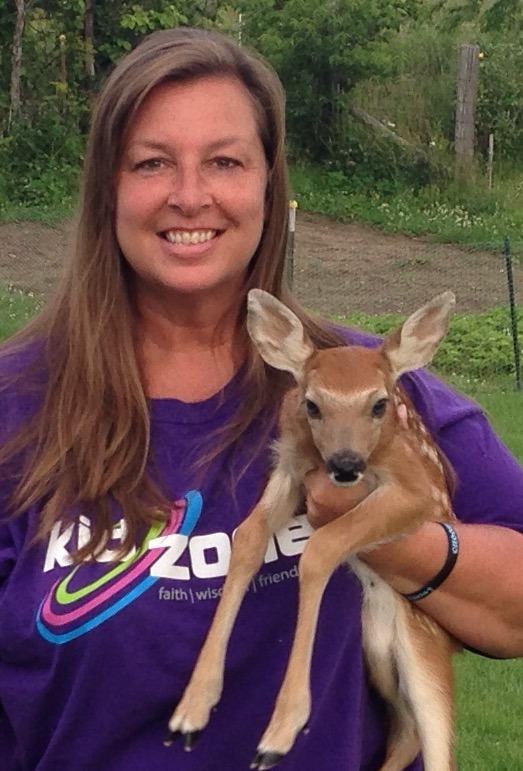
 We have been doing wildlife rehab for years.  I've raised countless deer, squirrels, raccoon, owl, coyote, bunnies and foxes.  Not to mention, I did my fair share of reviving many puppies and kittens as a vet tech over the years.


You may be doing more harm than good if you don't take care of an orphan properly.  Whether it's kittens, raccoons, puppies or bunnies, here are some things you need to know.

1.  Warmth before food.  If you find an orphaned animal fallen from a tree after a storm and it's wet and cold, it's not going to eat.  You need to get its body temperature up FIRST.  Wrapping the orphan in a thin t shirt and holding it next to your body is a great heat source and will be very close to its natural body temp.  
When you go to bed, place the orphan in an open container with a thin layer of bedding it can burrow into (like a small towel) and place ONLY the CORNER of the container on a heating pad set on LOW.  This will allow the orphan to move closer to or further from the heat source.  Heating pads vary in temp and its really easy to kill an orphan by over heating.

2.  Orphans get hypoglycemic quickly and will be too lethargic to eat.  If you force feed them, they will choke and die.  You can easily raise blood sugar levels by dipping a cotton swab in honey and wiping it inside the cheek.  The very vascular membranes of the mouth will quickly absorb the sugar.  Once is enough.  Spiking the blood sugar can be as harmful as low blood sugar.  Once the orphan's blood glucose has risen, it's appetite will usually kick in.


3.  THIS is how baby animals eat- NOT ON THEIR BACKS!  All it takes is one inhaled drop of milk into the lungs for the orphan to get pneumonia and die.  If you'd like to experiment- lay on your back and drink a bottle of Pepsi.
*  Hint: you will choke.


4.  Here is proper hand positioning for bottle feeding.  Place the orphan belly down on your palm..  Put its head between your first and middle fingers.  This will allow you to steady it, but also be able to see if it's drinking.


5.  Stimulation:  mom licks the babies while they are nursing.  It's not just a bath.  The movement of her tongue on their bodies stimulates digestion.  You HAVE TO do the same thing until they can potty on their own.  Use a tissue or soft paint brush to wipe the whole body especially under the tail.  Be gentle.  Be ready for a mess.  But above all, keep the belly DOWN!   
If your orphan does cough, lower it's head below its body and allow those milk bubbles to run out.

If you are taking care of wildlife until you can get it to the proper people, call your veterinarian and ask for milk replacers and feeding schedule that are similar to the same age puppy or kitten.  Most species of animals open their eyes between 10-14 days.  If the orphan you have still has its eyes closed, it is very vulnerable to every problem there is.  Be careful.  Don't be a hero.  Get it to a professional!

Reminder:  wild life are not pets.  It is illegal to keep them.  Contact your local Wild Life Rehab or the DNR! 

Monday, February 13, 2017

and speaking of Valentine's Day - ARE YOU AND YOUR DOG ENGAGED???

Whenever I am working with a dog in our training area and open the door, this is my view...
My dogs line up HOPING and PRAYING that it's their turn next!  

    If you've ever seen me work my dogs or anyone else's, you can testify that I have very high expectations for compliance.  I have a very clear, consistent rule: Compliance will get a reward every time and defiance will get a consequence every time.
So how come they don't hate me???  How come they would do ANYTHING for me?

     The answer is simple- it's ENGAGEMENT!  The first lesson I teach any dog is to engage me- make eye contact- ask me "WHAT???" 
 I'm not into intimidation or threats.  It's just a simple rule:  Good things come from making an effort to understand and communicate with me.

Lesson #1 with an 8 week old puppy begins with engagement.  Sure Pup, you are allowed to wander off and sniff things, but.... LOOK WHAT I HAVE!!!!!  (ball!  treats!  excitement!)
Any time the puppy interacts with me, even if it's a quick drive by, I praise them.  I'm silent when they don't want to be around me.  I won't beg for their attention.  But I will REWARD the heck out of it.

Next step is the Name Game.  It's simple.  Say the dog's name and if he makes any effort to look your way, you reward it.  I toss a treat or ball and go crazy every time the dog responds to his name.  No commands are given.  I don't make him "Come here" for reward.  I don't make him "Sit."  All I ask is to look at me and throw reward at him.  SIMPLE, huh?

Why?  Because communication begins with eye contact!  If we don't look, we don't acknowledge.  We don't respond.  If you have teenagers, you already understand.  
I advance and graduate the game by making finding my eyes more challenging.  Sitting on a five gallon bucket or a swivel chair and turning away from the dog makes it a fun challenge for the dog to come find my eye contact.  
Later, I might add tempting distractions like food or toy on a table and go ballistic when they choose to look to me instead.

This ENGAGEMENT is the basic foundation for every discipline, whether you're training the next world champion dock diver or need the family pupster to stop barking at squirrels.  It all begins with a relationship that is the best thing going.
    I want my dogs to anticipate and hope for a command, because it carries a huge opportunity for reward!
   So, are you and your dog engaged?
 If your answer is "well, yes, if I have a cookie" then that's all you need.  You have a reward system in place, now just be clear and consistent and teach your dog how to earn it.  By ENGAGING!


Friday, February 3, 2017

SERVICE DOG ETIQUETTE


I almost always have a Service Dog at my side- whether it is my own personal dog that helps me with seizures, mobility and balance, or a dog that I am training, and I am always appalled at the reaction of people around me.  So, here are some guidelines to help you understand the role of a Service Dog and how you should respond to one.  


    The super power of the Service Dog is in their ability to recognize when things are "off" with their handler.
They can detect heart rate, blood pressure, breathing rate, mental status, blood sugar, pheromones and many other body functions when they are connected.
    However, many factors can interrupt the dog's ability to recognize and alert to change.  That is why it is so important for anyone in the area to be respectful of a Service Dog team and avoid distracting them at all cost.

    Never- EVER interact with a Service Dog.  
*The first reason being, that you will distract his attention away from his handler and he might miss a life saving signal.  
*The second is that a large part of a Service Dog's training is to only concentrate on his human.  Dogs selected to be Service Dogs have to be naturally friendly, so in many cases, a large part of their training has had to be teaching them to not socialize while on duty  Think of a Greyhound bus driver barreling down the highway at 60mph.  If you were on that bus, would you want the driver looking around and talking to everyone on the bus???  No!  Eyes on the road!
    
    You also need to remember that Service Dogs are still dogs.  They are sensitive to everything around them.  So you need to be careful not to step on, bump or startle them.  Dogs are low to the ground so anything happening above them can be frightening.  Dropping luggage, a purse or a backpack near them might frighten them the same as it would if we had something drop off of a high shelf past our head.  If a Service Dog feels threatened in a space, he might become more concerned with his own safety, rather than that of his handler.
   
A Service Dog team is a relationship that strengthens with time.  You can help that process by being respectful.  While some handlers might appreciate a compliment directed to them, like telling them their dog is pretty, still,  for the most part, people with disabilities just want to navigate through their day like everyone else and not constantly be pointed out or made to feel different.

   Lastly, remember that not all disabilities are visible.  Don't try to examine the handler and figure out what his disability is.  That's none of your business!
If you were picking up a prescription at the drug store and someone came over and tried to read the label to find out what was wrong with you, how would you feel???
   I have actually had clients who were reluctant to take their Service Dogs in public because of the reactions they get from lookey-lou's.  That is so unfortunate and unacceptable!

 Learn to coexist with Service Dog teams by being kind, considerate and respectful.  If your children are curious, it's an awesome opportunity to teach them how Service Dogs help people, but do it privately- don't point and explain loudly- "Look!  A Service Dog!  We can't pet him right now because he is helping his mommy."
...... yeahhhh that happens constantly.  Grrrrrrrrrr

Friday, September 16, 2016

Simon says.... What???

COMMUNICATION made simple!

Remember the game "Simon Says" that we played as kids?

Simon says- close your eyes.
Simon says- open your eyes.
Simon says- raise your right hand.
Put your right hand down.

If you put your right hand down, you lost and were out of the game.  Why?   Because the rules declare that you should only obey commands that begin with "Simon says."
But what if they said "Simon said"?  Or what if they said "Sliming says"
Would you hesitate?  Would you question if you heard right and if you should obey?
Of course!  Because you are a good listener and you want to WIN!  You didn't have to be threatened to obey.  You tried hard to obey because it was a fun game and you really wanted to WIN!
 
The same childhood game can be used as we train our dogs.
I hear dog owners all the time telling their dog "Sit. Sit down.  Come on.  You can do this.  Do you want a treat?  Sit down."
Or even more often I hear "Sit... Sit..... Sit.... Sit..... Sit..... Sit"

So let me ask you a question... what is your command for SIT?  Is it "3 sits" and a "sit down."?  Or is it "do you want a cookie?" or is it "Come on, sit for mommy."?

And what are the rules of the game?  If the dog sits, what happens?  And if he doesn't sit, what happens?
Oh wait- there are rules???  YES!  Absolutely!  And dogs desperately want to know what they are.  And you are confusing the heck out of them because you don't have any rules!

Here is a simple formula to follow for CLEAR, FAIR communication with your dog once he knows what the command means.

1. Say your dog's name to get his attention first and then give the command ONCE in a firm voice.
2.  Look at your dog.  Is he sitting?  Then give him a reward- something he really loves- a treat or toy or lovins.
 If he is not sitting, then give him a consequence.  Depending on your dog's drive, sensitivity and personality, a consequence may be simply turning away or applying leash pressure to direct his body into a sitting position.

It's that simple, People!  The rule is this: Obeying gets rewarded.  Disobeying gets a consequence.
The rule is not that you will repeat, negotiate or change your mind about what you want him to do.

I can't tell you how often I am called to evaluate an "aggressive" dog and when I arrive,  the dog greets me by lunging and barking and growling, and the owner stands there petting the dog and telling him "It's OK."
So you want me to make your dog stop doing something that you are rewarding him for???  Huh???
You can't give a positive response to a negative action.  That is against your own rules!
Whether the command is "Sit" or "Come" or "No bark" the rule needs to be the exact same-
Obey gets a reward.  Disobey gets a consequence.  How confusing is it to a dog who is being scolded for barking, but is being petted all the while he's barking?  That's so confusing to me it makes my head hurt!


I also think that social pressure some times makes us feel guilty and that for the sake of the those watching, we need to have a preschool level conversation with our dogs in our best puppy wuppy shmooshy punkin face voice, otherwise people will think we are being unkind.  You know what is unkind???  INCONSISTENCY!
When we drop our authority and become wishy washy, we lose our dog's trust. When we are too insecure to give a direct command that is easy to understand and follow, we are doing our dogs a HUGE disservice and diminishing their ability and drive to please us and WIN the game!

If you are guilty of negotiating instead of allowing your dog to win the game by obeying, it may take a bit to turn that bus around.  But you can!  Starting today- go get your leash and a hand full of hot dogs and play the obedience game.  Teach your dog the rules clearly so he can WIN!  It's a simple game he will love when YOU learn how to play FAIRLY!

Simon says GO TRAIN YOUR DOG!

Monday, May 9, 2016

BRINGING BABY HOME TO DOG

I normally try to use humor to make K9 training education more fun.  But there is nothing funny when reading a news article about a newborn baby killed by the family dog.  So I am moved to write seriously this time-

We see social media posts constantly of young children sharing personal space with the "fur baby" and almost feel pressured to make it happen so we, too, can catch that "awwwww" moment.  But far too often, it becomes the "OH NO!" moment.  

If we learn anything from dogs themselves, it's that our young are to be revered and respected.  Even the kindest, gentlest mother dog can become fiercely protective when she has pups and we need to take a cue from her.

I believe we have been mislead to think that we need to introduce the family dog to the new baby and show him his "new brother" A.S.A.P.   We share the baby with the dog in hopes of creating a joyous sibling relationship.  I will be the first to say, that in many cases, there is not a problem in doing this, but why take a chance? Why roll the dice with a tiny new life? Why not be extra careful and present your precious new child as something to be highly respected?

When bringing home your baby, your first course of action is to teach the dog to respect your baby's personal space.  Demand that he give distance!  If you can not make your dog stay away from your baby, you can not control nor predict the way your dog interacts with your baby.

Be proactive.  
Before baby ever comes home, teach your dog the commands "Leave it!"  and "Out!"
You can use whatever words you choose, but you need to be able to communicate that some things and some places are off limits.

You can practice these behaviors by walking into a room and not allowing the dog to follow you.  Turn and send him back.  ("OUT!")
You should also be able to place something on the floor, and tell your dog to leave it alone. ("Leave it!")  He should be respectful and obedient to the point of volunteering to move away, not just resisting temptation.
Remember that dogs can smell things from miles away.  They can surely investigate your new baby by using their nose from far across the room or out in the hallway.  They do not have to lick or press their muzzles into the object or carry it off in their mouth to gather information about what it is.
If you are not able to accomplish these simple behaviors, you need to enlist the help of a professional, no nonsense trainer who can help you establish rules.  If you can not enforce boundaries and off limits, your baby is at risk.

By setting these types of expectations early, your dog will understand his place in the family pack. Teaching him to leave the baby alone, will also be helpful in the future when you have a toddler walking around with Cheerios stuck to his forehead.

Once your baby is home, think of him as WET PAINT!  Stay back and do not touch!  It's totally fine for the dog to be around and be interested, but he needs to give space and stay out of the baby's business.  You can practice this by presenting your dog with something personal that belongs to your baby- a blanket, a diaper, a shirt.
Sit in a chair at your dog's height and let him see and smell it, but NO TOUCHING!  Give lots of praise for being interested, but respectful.  We also don't want to create a jealousy situation, so spending time in training sessions, will assure that your dog doesn't feel replaced. 

 Your dog should feel involved in treasuring the new family member.
It's very important that we don't set the baby up as "FORBIDDEN FRUIT."  We want interaction, but with limitations and reverence.  Your baby will have many interesting smells and your dog will want to investigate, but once again, he needs to keep a respectful attitude and not barge in or insist on contact.

NEVER EVER leave your dog in the room with your baby or young child alone- not even for 10 seconds.  Children far too often accidentally imitate prey animals with their movement and sounds, and curious dogs sometimes instinctively take liberties.  When you leave the room, take either the child or the dog with you.
If you invite your dog to leave the room with you, not only are you being a good supervisor, but this is another way to keep your dog feeling special while you create a safe place for your baby while you are out of the room.

I do dog safety seminars entitled SPAY/NEUTER/TRAIN/SUPERVISE.  In them we emphasize the importance of SPAY/NEUTER to remove the reproductive/competitive hormonal aspect.  Proactive TRAINING establishes rules and leadership. And SUPERVISION is necessary to make sure that a situation never escalates to a dangerous level.  If you would like information on how to book a seminar, please contact me at manestreamtraining@gmail.com.

Thursday, February 11, 2016

LEASH those EMOTIONS!

Your dog is a mirror of you.
           .........Or are you a mirror of your dog?

The million dollar question....

    When your dog "freaks out" at the vet, or another dog, or the mailman, how do you respond?  Do you get angry?  Frustrated?  Embarrassed?

    Of course you do!  We ALL do!  Emotions are natural.  They are a gift.  They let us know that we have feelings and are aware of what is going on around us.  But how we respond to our emotions makes all the difference in whether or not we can make a change in our dog's behavior.

    Leaders lead.  Followers follow.  I have people tell me all the time that they are the "Alpha."
Ok,  Sure.
 But then, why do you follow your dog?  When he barks, lunges, whines, jumps- do you get riled up?  Does your blood pressure rise?  Does your heart race?  Does that little vein in your neck pop out?  Do you panic?  Do you yell or wave your arms around like a rabid orangutan?
Then you are NOT the Alpha.  You are not the leader.  You are the follower.  You are mirroring your dog's anxiety.

   Leading our dogs doesn't mean we are the biggest, baddest, or toughest.  In fact it's quite the opposite.  Being the leader means that you determine the direction of the follower- not imitate the follower!

    Which one of us doesn't get really ticked off when the dog chews up something you loved, or leaves a stinky pile of nastiness on your freshly cleaned carpet.  It can be infuriating at times.  But responding or punishing your dog out of anger makes you weak and not trustworthy.  Before you decide what action to take to correct your dog's behavior, take a minute (or twelve) to get control of your emotions.  Use mistakes as an opportunity for teaching.  If you correct your dog with calm authority instead of a Tasmanian rage, he will respect you, not fear you.

    So, when Sir Barksalot acts like a complete fool, don't try to hide your emotions.  That's dumb.  Dogs can see right through fake and lose respect for you.  They want an authentic leader.

Here's a plan:

1. STOP.  Stand up straight. Remember, dogs communicate through body language so if you bend over or start spinning around and panic, you are signaling to your dog that you've lost it as well.

2.  Shorten your leash and reduce your dog's movement.

3.  While your dog continues to freak out, focus your eyes up and away from him.  Take a DEEP cleansing breathe and release all those inner thoughts of  "I'm going to kill you!"  Do not stare at him.  Eye contact is an affirming reward.  You do not want to affirm bad behavior.

4.  BE QUIET!  Yelling at him repeatedly becomes you barking- again imitating his behavior.

5.  Use leash pressure- not your hands- to control your dog's movement.

6.  Make him SIT.  Yeah, that may sound completely impossible.  And it probably is, unless you practice.  A lot.  You will need to practice this ahead of time.  Practice in your house.  Practice in your yard.  Practice in the parking lot at Walmart.  Practice in the pet store.  Practice at the vet.
 Most vets welcome you to come in and work on good behavior- it makes their job much easier.  So give them a call and go in and practice.  Since you are not actually having anything done, it can be an all positive experience for a change.  Winning!

7.  If you do not have the skills to make your dog sit in any situation, you are not the leader- your dog is.  Get some help from a professional trainer or obedience school.

Once you are confident that you are in control, when you get in sticky situations, go to your game plan.  Stay upright.  Stay focused.  Stay calm.  YOU need to act the way you want your dog to act-instead of your dog sucking you into a spinning vortex of stupid!  YOU CAN DO THIS!


Sunday, October 18, 2015

EMBRACE FAILURE!

Say What???
We live in a society of perfection.  We have selfie apps that remove your blemishes and make you look thinner.  We have an edit option and auto correct that hopefully keeps us from revealing our lack of spelling and good grammar.  We are flooded with images of successful people doing amazing things.

And then, there's us.  And our dog.

Personally, I have learned to embrace mistakes because it's like a big fat sign that says "HERE'S WHAT YOU NEED TO WORK ON!"  One walk through the park with my dog, and I'm painfully clear where I have not spent enough time training.  But hey!  That takes all the guess work out of it!

So, your dog acts like a blooming idiot in public.  He barks.  Or he lunges.  Or he pulls to the point that he gags himself.  So you just stay home.

Most people don't have any idea how to correct bad behavior, and even if they did, they are so afraid of "what people would think" that they keep their dog within the confines of their own home and pray no one ever comes over.

I recently took a very reactive dog to the dog park for training.  I kept him on leash and minded my own business.  A few dogs wouldn't leave us alone and I had to correct the dog I was working to keep him safe.  One owner snatched his very rude dog up and stomped away shouting "WE'LL JUST GO!"

I couldn't blame him.  He didn't know the circumstances at all.  If the roles were reversed, I'm sure I would have thought "What kind of idiot brings a dog like that to the dog park???"  I had a GREAT session with the dog there, but I went home literally sick at my stomach after the way people looked at me.  I was so glad I wasn't wearing anything that identified myself!  I was clearly the most hated person at the dog park.

So, I feel your pain.  And I have some advice for you...

1.  Learn from a Behavior Modification Specialist how to correct your problems.  General dog trainers are wonderful, but are often only experienced with the positive side of teaching behaviors, not correcting them.  Make sure you work with someone who has experience in behavior modification.

2.  Practice successfully.  Train your dog to respond to redirection when there is NO challenge.  Develop a clear communication of expectations and the reward/consequence system.  Do this in your house or yard with no one else around.

3.  Once you have accomplished teaching your dog to obey you, regardless of distractions, then set out and seek challenges.  Your attitude is reflected and amplified in your dog.  So if you see a dog, or squirrel or bike coming toward you and think to yourself "Oh. Crap" your dog will definitely pick up on that and go into defense mode.  He will want to defend you both from whatever made your mood change.

4.  Train a loose leash walk that does not transmit tension.  Keep your eyes up and embrace a challenge.  Try this thought process: "Oh good!  A dog (or squirrel or bike) is coming!  That will give me a real life opportunity to practice!"
  Then carry out your training plan.
If the dog makes a mistake- GOOD!  It gives you an opportunity to let him know that was not right.  Then let him try again!

5.  Distance is your friend-  if you can make your dog sit or stand quietly (I require them to sit) 500 feet away from whatever his trigger is, you have been successful!  Celebrate and reward!!!
Maybe tomorrow your goal can be 400 feet.  But for today- he did good!  Be happy with that and build from there.

Your dog may never be friendly with all dogs or people.  But let your goal be obedience- at any distance and in any form.  And if you fail, take note of what went wrong, and be conscientious about what you need to work on more.  Don't quit!  Limiting your dog's activity and experiences will not make him better.  It will make him worse.  Why should his life be small and boring just because you don't feel up to the challenge of teaching him how to navigate a world that is HUGE and FUN!!!

Now get out there!!!

Monday, May 11, 2015

SAME SEX- what no one told you-


I can't tell you how many times I've been called for a behavior consultation into a home where dogs are fighting.  "They love each other one minute and the next, they're trying to kill each other." And almost always, it's dogs of the same sex.
  So often, "Littermate Syndrome" or something very much like it is the problem.  And people always say "I wish someone had told us about this!"
   Littermate syndrome: someone goes to the breeder, the shelter, the pet store and sees puppies- they can not decide which one they want and they seem so bonded, it would be a shame to break them up- so they get 2.
   But Littermate Syndrome is not limited to littermates.  I prefer the term "Gladiator Syndrome."
Gladiators are 2 very closely matched rivals- usually same sex, same size, same temperament, same age, same human parents... etc. etc. etc.
   The problem is that there is no natural determining factor which makes one or the other obviously more dominant.  In natural canine behavior, there are scraps or fights.  Someone wins.  Someone loses.  And the loser gives it up.  He either submits to the more dominant pack member or he moves on to form his own pack.
   However, in our homes, we break up fights because
#1 It scares the crap out of us and
#2 We don't want to pay vet bills or lose a dog
So, the dogs never get to determine once and for all who is in charge.

HOWEVER- this is a false pretense from the start.  And here's the helpful part of this little article-
NO DOG is in charge.  YOU ARE IN CHARGE.  They don't need to fight over food, because YOU are the supplier and provider.  They don't need to fight over bones or toys, because you bought and own the toys.  They don't need to fight over who gets to sit next to you on the couch, because being on the couch requires your authorization.

But establishing that concept is the most commonly missed order of business in most households. We bring them home and give them the keys to the kingdom.  We keep dishes full and floors littered with half chewed bones and ripped up toys as though we are their indentured servants.
Here are some basic rules to follow to take back leadership of your pack if there is fighting and how to avoid it in selecting future family members.

Leadership or "dominance" which has become the politically incorrect term, but whatever... is most clearly taught through basic obedience.  Setting rules and structure and a reward and consequence system is easily established with 5 minutes of obedience practice several days a week.

Put your dog on leash and practice "sit" with reward.  Practice "lay down" with reward.  Practice "come" with reward.   Then, incorporate those behaviors into every day life.  Dog must sit to be fed.  Dog must lay down to have leash put on.  Dog must sit before crossing street on walks.  Dog gets a treat for coming in the house when called.  Chew bones or toys are given and then taken and put away for a later time.  Something as simple as that teaches your dog to look to you for leadership.

Feeding Circle is another wonderful exercise that teaches dogs respect and patience and that fighting is not the way to get rewards.  Here is a short video you can watch to see how dogs are focused and respectful of one another and learning that all good things come from MAMA!  https://youtu.be/travbAhGyao

Secondly, when adding a dog to your family, way too many people want one exactly like the dog they already have.  Unfortunately, that seldom turns out to be the case and they often wind up very disappointed that Dog #2 is nothing like Dog #1.
But to avoid, issues, GO OPPOSITE.  Opposite sex.  Opposite size.  Different  age.  Different breeds.
Another misconception is that if you have 2 that are alike, they will keep each other company.  If they do bond so closely that they only need each other, it creates another issue in that they don't need their owner and will often disregard them or have very little respect for them.

Now before you fire off your "I have same sex, same breed, littermates, etc." comment to me-
understand that I have 5 dogs-   but as within a wild pack, my structure is evident and no one needs to fight about anything, so they all commune quite well. We are careful to manage and crate if there is no supervision or challenges present themselves- as in, I have a 13 year old Akita who is inexplicably grumpy at times.
  If your dogs get along, CONGRATULATIONS!  You are doing something right and it is possible!

Two of these 3 Chihuahua were death matched rivals until their owner stepped up- and now... well, look at them!
Chihuahuas owned by Jamie Wilson
Crested Hairless owned by Matt & Lauri Meins pictured at top, couldn't even be in the same room when I met them.